
The global battery energy storage market is projected to grow from $32.62 billion in 2025 to $161.12 billion by 2034 at an 18.86% CAGR. But the headline number is not the most important statistic for procurement professionals. What matters more is that Chinese companies account for over 90% of global storage battery shipments — a structural dominance that reshapes every supply chain decision in the BESS industry.
The Scale of China’s BESS Manufacturing
The regional breakdown tells the story clearly:
- Asia Pacific: $17.31B (2025) growing to $21.32B (2026), holding 53.06% of the global market
- North America: $11.18B (2025) to $14.23B (2026), 34.29% share
- Europe: $3.98B (2025) to $4.73B (2026), 12.21% share
- China alone: $18.94B projected for 2026
Chinese battery manufacturers control approximately 80% of the global battery cell market, and most of the remaining 20% rely on lithium-ion cell components supplied by Chinese companies. This is not a temporary cost advantage — it reflects deep structural advantages in mineral access, manufacturing scale, and government policy alignment.
Market Concentration: The Top 6 Hold 75%
According to InfoLink’s 2025 data, the global storage battery market is highly concentrated among Chinese manufacturers:
- CATL: approximately 25% market share — the undisputed leader
- Hithium and EVE Energy: 13% each
- BYD: 10%
- CR6 (top 6 combined): about 75% of total market
- CR10: 89.8% (slightly down from 90.9% in 2024)
Every company in the top 6 is Chinese. The slight CR10 decline suggests emerging competition from second-tier manufacturers — but this competition is also primarily happening within China.
Technology Trends Within the BESS Market
Large-Format Cells
The industry has shifted from 280Ah standard cells (2024) to 500-1000Ah mass production (2025-2026). Large-format prismatic cells make 4-hour systems more cost-effective because they require fewer cells and simpler BMS architecture. The trade-off is thermal management — bigger cells mean more heat per unit, so HVAC design becomes critical.
Duration Shift
4+ hour battery storage systems grew from 15.4% of installations in 2024 to 27.5% in 2025 — a 12.1 percentage point shift in a single year. This trend is driven by solar+storage projects that need longer discharge windows and utility-scale capacity firming.
Cost Trajectory
IRENA projects that total installed BESS costs will decline by 50% by 2030 compared to 2016 prices, with battery cell costs dropping over 60%. Projects planned for 2027-2028 will benefit from significantly lower capital expenditure. Current pricing should be evaluated against the declining cost curve, not as a fixed point.
Supply Chain Strategy for BESS Procurement
Based on this market structure, three strategic implications emerge:
1. Direct Sourcing Is the Cost-Optimization Frontier
With cell manufacturing concentrated in China, the most effective cost strategy is direct engagement with Chinese manufacturers or their authorized integrators. Multiple sourcing layers add margin without adding value.
2. Quality Differentiation Matters More Than Ever
The market has shifted from supply exceeding demand to a tight balance in 2025. Lead times are tightening. Selecting manufacturers with proven track records — not just the lowest price — is now a supply chain risk mitigation strategy.
3. Pair BESS with Standards-Compliant Electrical Infrastructure
BESS procurement does not end at the battery container. The grid interconnection requires properly specified switchgear and power distribution equipment. Pairing Chinese-manufactured BESS solutions with IEC 61439-compliant low voltage switchgear from established manufacturers ensures the complete system meets international standards.

What This Means for the Electrical Equipment Supply Chain
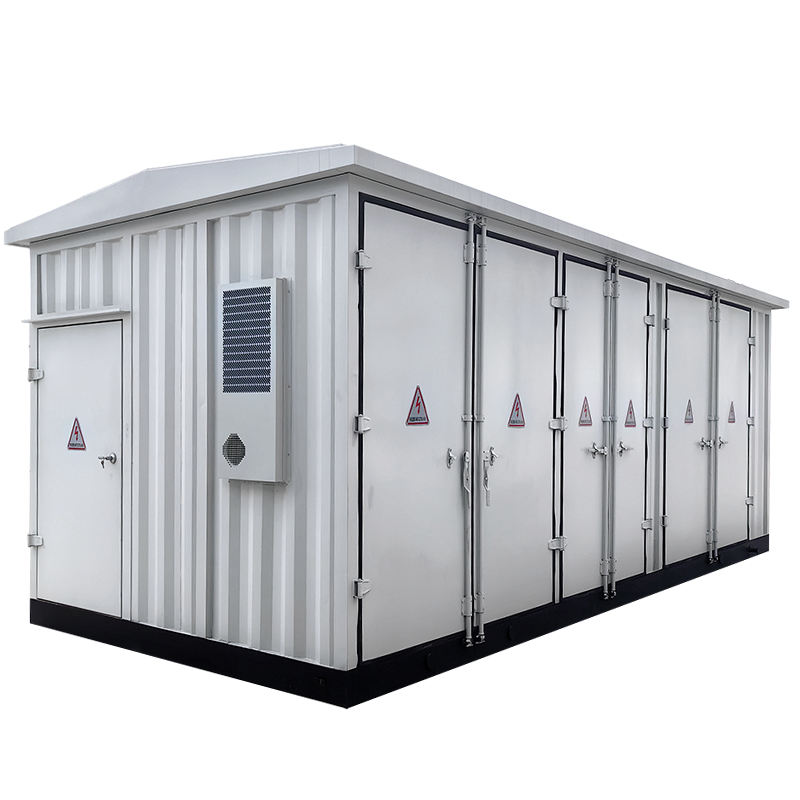
For companies sourcing both energy storage and power distribution equipment, the opportunity is to integrate procurement. Solar farm power collection systems and compact substations that pair BESS with step-up transformers and switchgear create a complete, coordinated electrical chain — designed to match, not patched together.
For those sourcing IEC-compliant switchgear to pair with energy storage systems, the combination of China’s battery manufacturing scale and established switchgear production capacity creates a practical path to cost-competitive, standards-compliant energy storage deployment.
Related Products & Solutions
For complete low and medium voltage power distribution equipment, explore our full lineup:
- Pillar Equipment: EV charging station, vacuum circuit breaker, soft starter
- LV Switchgear: GGD fixed switchgear, XL-21 power cabinet, GGJ power factor correction capacitor bank
- MV Switchgear: GHRM SF6 ring main unit, KYN28 VCB panel, XGN66 fixed panel
- Transformers & Substations: ZBW prefabricated substation, distribution transformers