

QHSQ Dual Power Automatic Transfer Switch Cabinet
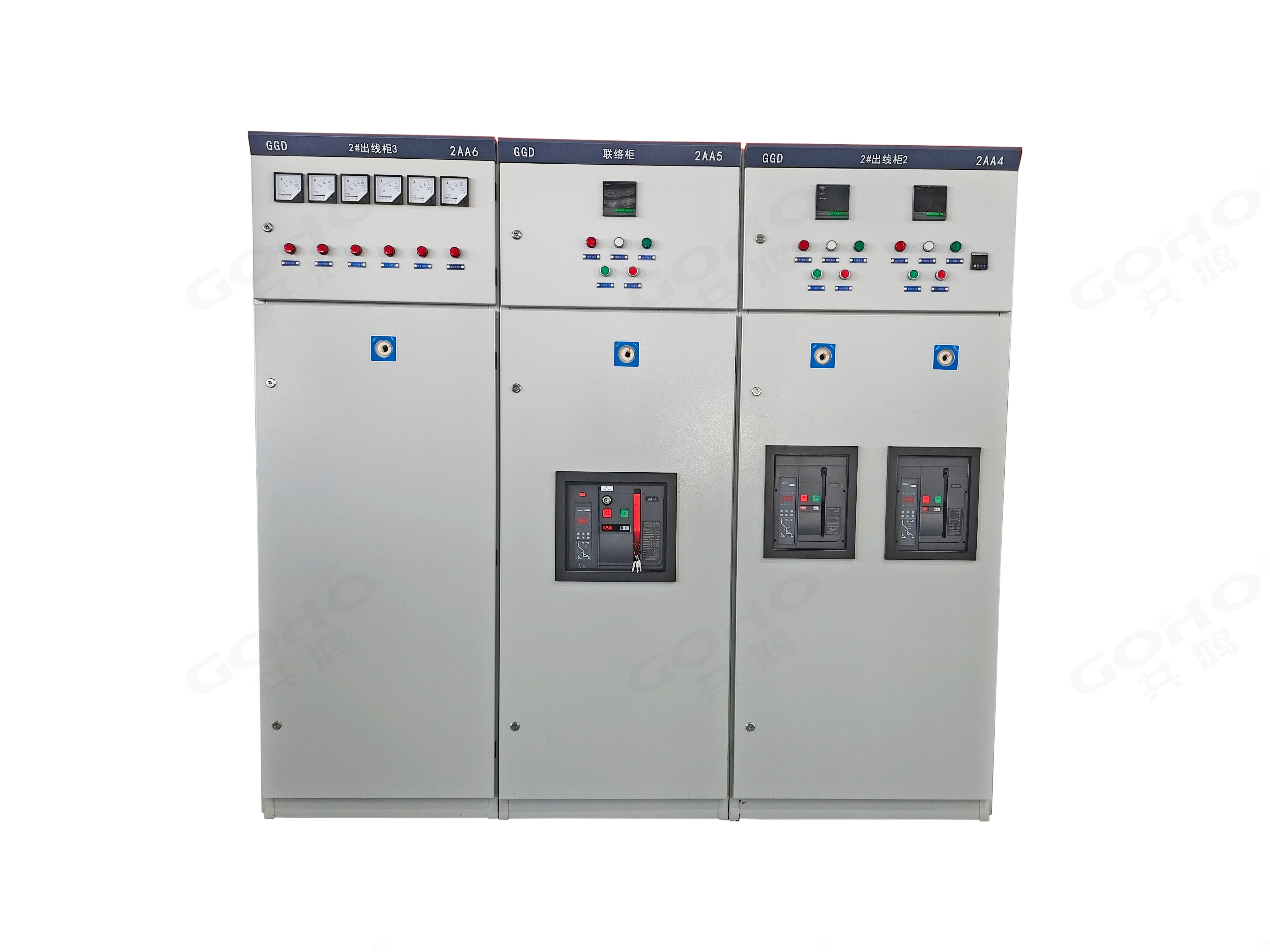
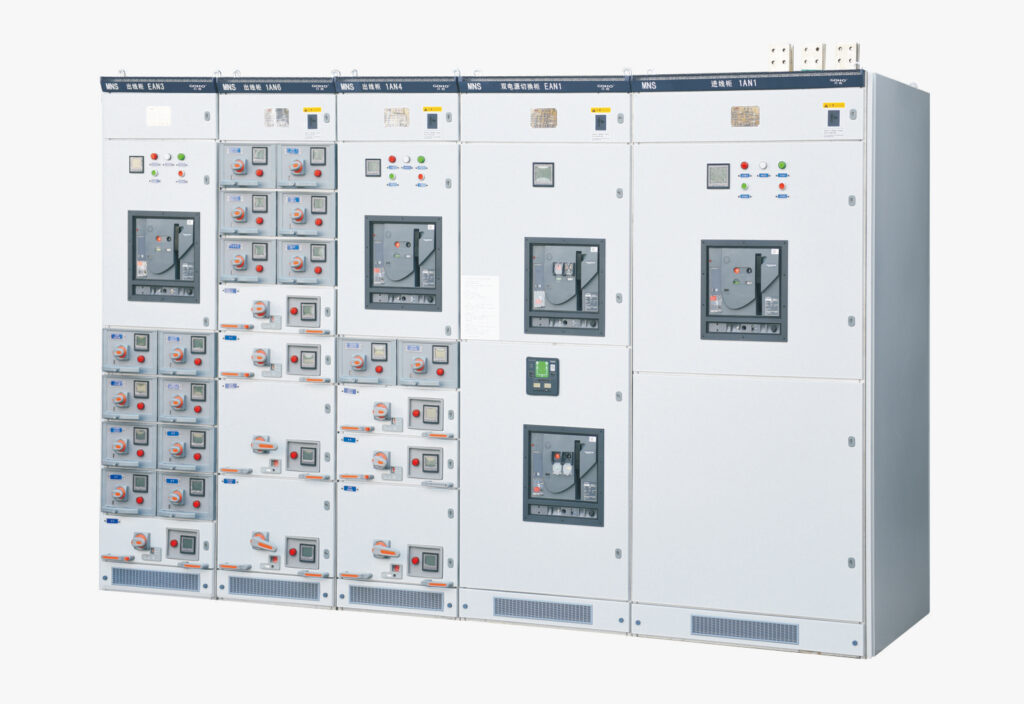
QHSQ dual-power automatic transfer switch (ATS) distribution cabinet — designed for power plants, industrial enterprises, and commercial facilities requiring reliable dual-power supply switching. Rated 400V/415V (500V max), 63A–630A, with automatic/remote/manual transfer modes and 0.1–5 second transfer time. Integrates an intelligent ATS controller and MCCB/contactor-based switching mechanism to ensure uninterrupted power supply to critical loads during mains failure.
Reliable Dual-Power Automatic Transfer Switching
Uninterrupted power supply to critical loads through intelligent mains-to-standby automatic transfer
QHSQ dual-power distribution cabinets are suitable for power plants, industrial and mining enterprises, and commercial facilities requiring reliable dual-power supply switching. They are designed for three-phase three-wire, three-phase four-wire, and three-phase five-wire systems with AC voltage up to 500V and rated frequency of 50Hz/60Hz, used for power and lighting distribution where supply continuity is critical.
The QHSQ series integrates an automatic transfer switch (ATS) controller and switching mechanism within a standardized distribution enclosure, providing automatic switching between primary (mains/normal) and secondary (standby/emergency) power sources. In the event of mains power failure, voltage deviation beyond preset thresholds, or phase loss, the ATS controller initiates automatic transfer to the standby source within a configurable time delay (typically 0.1–5 seconds), ensuring uninterrupted power supply to critical loads.
The ATS dual-power distribution box is designed for indoor wall-mounted installation with front-panel access for operation, monitoring, and maintenance. After transfer to the standby source, the controller continuously monitors mains voltage recovery — once the mains returns to within acceptable thresholds for a user-adjustable stabilization period (0–30 minutes), the controller automatically transfers back to the primary source, ensuring stable mains restoration before reconnection.
- 63A–630A range — 6 selectable current ratings
- Automatic dual-power switching — 0.1–5s configurable transfer
- 3 operating modes — automatic / remote / manual
- Configurable return function — 0–30 min stabilization delay
- Wall-mounted design — indoor, front-panel access
- Comprehensive detection — voltage, phase loss, over/undervoltage, frequency
Detailed Parameters
Complete technical specifications for QHSQ series dual-power ATS distribution cabinet
| Parameter | Specification |
|---|---|
| Rated Voltage | AC 400V / 415V (500V max.) |
| Rated Frequency | 50Hz / 60Hz |
| Rated Current | 63A / 100A / 160A / 250A / 400A / 630A |
| Rated Short-Time Withstand (Icw, 1s) | 10kA / 25kA |
| Rated Peak Withstand Current (Ipk) | 25kA / 52.5kA |
| Power System | 3-phase 3-wire / 3-phase 4-wire / 3-phase 5-wire |
| Transfer Type | Automatic (self-acting) / Remote / Manual (maintenance bypass) |
| Transfer Time (Mains → Standby) | 0.1 – 5.0 seconds (adjustable) |
| Return Time (Standby → Mains) | 0 – 30 minutes (adjustable, with voltage detection) |
| Detection Parameters | 3-phase voltage, phase loss, phase sequence, overvoltage, undervoltage, frequency deviation |
| Switching Device | MCCB-based or contactor-based ATS mechanism |
| Electrical Durability | ≥ 6,000 operations (at rated current) |
| Mechanical Durability | ≥ 10,000 operations |
| Degree of Protection | IP30 / IP40 (indoor enclosure) |
| Installation Type | Indoor, wall-mounted, front-panel access |
| Enclosure Material | Cold-rolled steel with epoxy powder coating |
| Operating Temperature | -5°C to +40°C |
| Ambient Humidity | ≤ 95% (non-condensing) |
| Altitude | ≤ 2000m |
| Status Indicators | LED indicators for source status, transfer position, alarm |
| Controller Type | Intelligent microprocessor-based ATS controller |
| Control Voltage | AC 220V / 380V (selectable) |
| Standards | GB/T 14048.11, IEC 60947-6-1 |
Why Choose QHSQ ATS Cabinet
Intelligent dual-power transfer ensuring continuous power for critical applications
Automatic Dual-Power Switching
The integrated intelligent ATS controller continuously monitors both power sources — in the event of mains failure, undervoltage, overvoltage, or phase loss beyond preset thresholds, the controller initiates automatic transfer to the standby source within a user-adjustable time delay (0.1–5 seconds), restoring power to critical loads without manual intervention.
Reliable Power Continuity
Ensures uninterrupted power to critical loads including safety systems, emergency lighting, fire pumps, communication equipment, life safety systems, and process control systems — essential for applications where power interruption poses safety risks, causes production losses, or damages sensitive equipment.
Configurable Operating Modes
Supports automatic mode (self-acting transfer based on source monitoring), remote control mode (transfer command via external signal), and manual mode (maintenance bypass operation) — providing operational flexibility for different application scenarios and maintenance requirements, with clear mode selection on the front panel.
Configurable Return Function
After transfer to standby source, the controller monitors mains voltage recovery — once mains voltage returns to within acceptable thresholds for a user-adjustable stabilization period (0–30 minutes), the controller automatically transfers back to the primary source, ensuring stable mains restoration before reconnection and preventing nuisance transfers during transient voltage fluctuations.
Compact Wall-Mounted Design
Designed for indoor wall mounting with front-panel access — all operating controls, status indicators, and metering displays are accessible from the front, minimizing footprint and allowing installation in space-constrained distribution rooms, electrical closets, and equipment corridors where floor space is limited.
Clear Status Indication
Front panel provides visual indication of active power source, source availability status, transfer position, and system normal/alarm conditions via LED indicators and optional digital display — enabling at-a-glance system status assessment by facility operators without opening the enclosure.
Versatile System Compatibility
Compatible with three-phase three-wire, three-phase four-wire, and three-phase five-wire (TN-S, TN-C, TN-C-S, TT) power distribution systems — suitable for a wide range of international low voltage distribution network configurations, ensuring the same product can be deployed across projects with different earthing arrangements.
Protection Coordination
Incoming and outgoing circuits are protected by MCCBs with coordinated protective device settings, ensuring selective fault isolation while maintaining power supply to unaffected circuits — a fault on one outgoing circuit will trip only that circuit's breaker without triggering a full ATS transfer, maximizing supply continuity.
Comprehensive Source Detection
The ATS controller monitors three-phase voltage, phase loss, phase sequence, overvoltage, undervoltage, and frequency deviation on both power sources — ensuring that transfer only occurs when the standby source is healthy and within acceptable parameters, preventing connection to a degraded standby supply that could damage downstream equipment.
Where QHSQ ATS Cabinet Excels
Critical power supply continuity across safety-sensitive industries
Power Plants
Auxiliary power changeover & emergency systems
Industrial Plants
Process-critical power continuity
Commercial Buildings
Life safety, emergency lighting & fire pumps
Hospitals
Critical care & medical equipment backup
Data Centers
Uninterruptible power distribution
Airports & Railways
Essential services & signaling power
Water Treatment
Continuous process power supply
Oil & Gas
ESD & safety system power
Quality & Compliance
Certified for reliable automatic transfer switching performance
IEC 60947-6-1
Automatic transfer switch equipment
GB/T 14048.11
LV switchgear — automatic transfer switch
ISO 9001
Quality management system certified
Type Tested
Full design verification testing
Frequently Asked Questions
Common questions about QHSQ dual-power ATS distribution cabinets
An ATS (Automatic Transfer Switch) cabinet and a UPS (Uninterruptible Power Supply) serve complementary but distinct roles in critical power systems. The ATS provides automatic switching between two independent AC power sources (e.g., utility mains and a diesel generator) with a transfer time of 0.1–5 seconds — there is a brief power interruption during transfer. A UPS provides instantaneous, seamless power from batteries during the transfer gap, ensuring zero interruption. For loads that can tolerate a brief interruption (such as HVAC, general lighting, or non-critical motors), an ATS alone is sufficient and much more cost-effective. For loads that cannot tolerate any interruption (such as servers, medical equipment, or PLCs), a UPS is required in addition to the ATS — the ATS handles the longer-term source changeover while the UPS bridges the transfer gap. In many installations, the ATS feeds a UPS, which then supplies the most critical loads.
The optimal transfer time depends on the type of loads being supplied and the characteristics of your standby source. For motor loads, a transfer time of 1–3 seconds is typical to allow the motors to coast down slightly, reducing the inrush current when reconnecting to the standby source. For resistive loads (lighting, heating), faster transfer (0.3–1 second) is acceptable. If the standby source is a generator, you must ensure the generator has reached stable voltage and frequency before transfer — this typically requires 3–5 seconds for most diesel generators. If the standby source is another utility feed, faster transfer (0.1–1 second) is possible. Always configure the transfer time to be longer than the generator's run-up time to avoid transferring to an unstable source. The controller's adjustable 0.1–5 second range covers these scenarios, and our engineers can recommend the optimal setting based on your specific standby source and load profile.
If both power sources are unavailable (out of voltage range, phase loss, or frequency deviation), the ATS controller does not connect to either source — it remains in the off/neutral position to prevent connecting critical loads to an unacceptable power supply. The controller will continue monitoring both sources and, once a source returns to within acceptable thresholds, will initiate transfer automatically. If the standby source is a generator, the controller typically sends a start signal to the generator when the mains fails, and then transfers to the generator once it reaches stable output. If both sources fail and no generator start signal is configured, the loads remain de-energized until at least one source recovers. For applications requiring continuous power even during dual-source failure, a UPS or battery backup system must be installed downstream of the ATS.
The choice between MCCB-based and contactor-based ATS depends on your application requirements: (1) MCCB-based ATS uses molded case circuit breakers as the switching element, providing built-in overcurrent and short-circuit protection in addition to the transfer function. This is the preferred choice for higher current ratings (160A and above) and for applications where the incoming sources require overcurrent protection. MCCB-based ATS has slower mechanical operation (typically 0.3–5 seconds) and lower electrical endurance (around 6,000 operations). (2) Contactor-based ATS uses AC contactors for switching, offering faster transfer (0.1–1 second) and higher electrical endurance, but no built-in overcurrent protection — separate protection devices must be installed. Contactor-based ATS is more suitable for lower current ratings (up to 250A) and applications requiring frequent or fast switching. For most general-purpose dual-power applications, MCCB-based ATS is the recommended choice for its integrated protection and reliability.
Yes, the QHSQ ATS cabinet is fully compatible with diesel generators as the standby source. The ATS controller provides a dry contact output signal to start the generator when the mains source fails. The controller then monitors the generator output voltage and frequency and initiates transfer once the generator output reaches the acceptable thresholds — typically after a configurable delay of 3–5 seconds to allow the generator to warm up and stabilize. When the mains recovers, the controller transfers back to mains after the configurable stabilization delay and then sends a stop signal to the generator, usually after an additional cool-down period (adjustable). It's important to ensure the generator's capacity matches or exceeds the connected load, and that the generator's voltage and frequency regulation are within the controller's acceptance thresholds. We can provide specific wiring diagrams for generator integration on request.
Recommended maintenance for the QHSQ ATS cabinet includes: (1) Visual inspection — check for signs of overheating, loose connections, dust accumulation, and corrosion (quarterly). (2) Functional test — perform a manual transfer test using the manual operating mode to verify both transfer directions operate correctly (semi-annually). (3) Automatic transfer test — simulate a mains failure (with the standby source energized) to verify the automatic transfer and return functions work correctly (semi-annually). (4) Contact inspection — inspect the ATS switching contacts for wear, pitting, or burning; clean or replace as needed (annually, or after a significant number of operations). (5) Controller battery check — if the controller has a backup battery for maintaining settings during power loss, check and replace as needed (every 2–3 years). Always follow lockout/tagout procedures before performing any maintenance, and consult the maintenance manual for detailed instructions specific to your model. For critical applications, consider a maintenance contract with a qualified service provider.


Ensure Uninterrupted Power for Critical Loads
Send us your load details and standby source type (generator or alternate utility). We'll configure the right QHSQ ATS cabinet — current rating, switching type, and transfer time — with a factory quote in 24 hours.