
Compact substations are reshaping how power infrastructure is delivered worldwide. The compact substation market alone is projected to grow from $4.2 billion in 2024 to $11.1 billion by 2032 at a 13.2% CAGR — nearly double the rate of the broader pad-mounted transformer market. Combined with the prefabricated substation market valued at $21.4 billion in 2025, this infrastructure shift represents tens of billions of dollars in new investment over the next decade.

Why Compact Substations Are Replacing Traditional Designs
Three structural forces are driving the shift toward compact and prefabricated substations:
Urbanization and Land Constraints
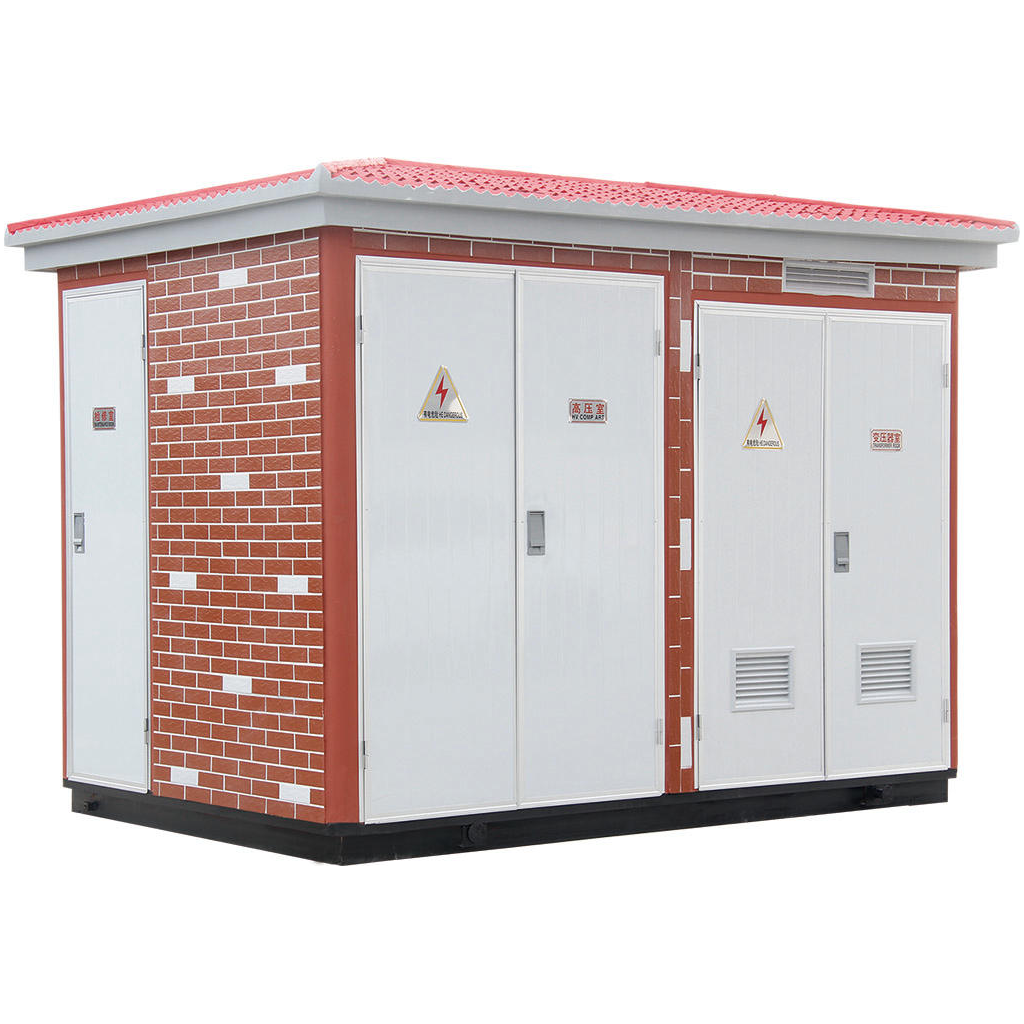
Traditional substation designs require large fenced plots — typically 200-500 square meters. Compact and pad-mounted designs integrate transformer, HV switchgear, and LV distribution in a single tamper-resistant enclosure requiring only 10-30 square meters. In dense urban environments where land is the primary cost driver, this footprint reduction alone can justify the compact approach.
Renewable Energy Distributed Generation
Solar farms and wind installations need localized step-down and grid interface equipment. Compact substations provide the interconnection point without the civil engineering overhead of traditional substation construction. For a deeper understanding of the different types, see our guide on European vs American type substations.
Speed of Deployment
Prefabricated substations ship as complete units, reducing on-site construction time from months to days. Factory assembly and testing means fewer on-site defects and more predictable project timelines — critical for renewable energy projects running on tight schedules.
The Market Numbers: Four Segments Compared
The compact power infrastructure market spans four distinct segments, each with its own growth dynamics:
- Compact substation: $4.2B (2024) to $11.1B (2032), CAGR 13.2% — the fastest-growing segment
- Pad-mounted transformer: $24.15B (2025) to $43.35B (2034), CAGR 6.72%
- Prefabricated substation: $21.4B (2025), CAGR 7.7% through 2034
- Mobile substation: $1.2B (2025) to $1.8B (2033), CAGR 4.7%
The compact substation segment’s 13.2% CAGR is the standout — nearly matching the smart grid market’s growth rate. When a niche infrastructure segment grows nearly as fast as the entire smart grid sector, it signals a fundamental shift in how power infrastructure is delivered.
Where Is the Growth Concentrated?
In the mobile substation market, industrial applications account for 51.2% of revenue — indicating that industrial users are investing in flexible, deployable power solutions, not just upgrading existing infrastructure. For pad-mounted transformers, the “above 1 MVA” rated power segment is growing faster, driven by EV charging infrastructure and data center power demands — both of which require substantial power density in compact footprints.
Total Cost of Ownership: Compact vs Traditional
The economic case for compact substations extends beyond the equipment price tag. The total cost of ownership comparison includes:
- Civil works: Compact units require a concrete pad, not a substation building — saving 60-80% on civil construction
- Installation time: Factory-assembled and tested units reduce on-site work from 4-8 weeks to 2-5 days
- Maintenance access: Pad-mounted designs provide safer, tamper-resistant access, reducing maintenance downtime
- Land cost: In urban environments, the land savings alone can justify the compact premium
Oil-Immersed vs Dry-Type: Making the Right Choice
Within compact substations, the insulation type matters. Oil-immersed transformers remain dominant due to cost and efficiency advantages, particularly for outdoor installations. However, environmental regulations and fire safety codes are pushing dry-type adoption, especially in indoor and commercial applications.
For guidance on choosing between the two, see our comparison of oil-immersed vs dry-type transformers. For projects in desert or coastal environments, enclosure protection ratings matter as much as the electrical specification — anti-corrosion treatments and proper ventilation design are essential.
Regional Growth Dynamics
The pad-mounted transformer market shows strong growth across all regions, but the drivers differ:
- Asia-Pacific: Urbanization and grid expansion in China, India, and Southeast Asia. Manufacturing capacity makes this region both the largest producer and consumer.
- North America: Grid modernization, aging infrastructure replacement, and EV charging network buildout funded by the Inflation Reduction Act.
- Europe: Renewable integration, smart grid deployment, and replacement of aging SF6-equipped units with environmentally compliant alternatives.
What This Means for Your Next Project
For project developers and EPC contractors, the message is clear:
- Standardization is accelerating. Prefabricated and compact substations are increasingly delivered as standard products, not custom-engineered projects. This means shorter lead times and more predictable pricing — but also more supplier options to evaluate.
- The integration opportunity is real. Compact substations that combine HV switchgear, transformer, and LV distribution with smart monitoring are becoming the default for new urban and renewable projects. Manufacturers offering integrated, IEC-compliant compact substation solutions are positioned to capture disproportionate market share.
- Plan for the full electrical chain. When sourcing compact substations, ensure the LV side is also properly specified — including LV switchgear and distribution boxes that match the substation’s ratings.
The days of building custom substations on-site for standard distribution applications are ending. The future is factory-assembled, tested, and delivered — ready to energize.
Related Products & Solutions
For complete low and medium voltage power distribution equipment, explore our full lineup:
- Pillar Equipment: EV charging station, vacuum circuit breaker, soft starter
- LV Switchgear: GGD fixed switchgear, XL-21 power cabinet, GGJ power factor correction capacitor bank
- MV Switchgear: GHRM SF6 ring main unit, KYN28 VCB panel, XGN66 fixed panel
- Transformers & Substations: ZBW prefabricated substation, distribution transformers