
Putting a couple of chargers in a parking lot is a small project. Building a commercial charging station is something else entirely — it is a business, and the equipment choices you make in the first month will decide whether that business makes money or quietly loses it. The difference between the two is not the chargers. It is treating the whole site as one power system.
Most stations should not use just one type of charger
The single most common mistake we see is a station built around one charger model. A commercial site has different customers with different dwell times, and the equipment mix should reflect that.

Destination chargers handle the customers who park for hours — shoppers, hotel guests, office workers. A bank of 7kW AC piles covers them cheaply and keeps the bays occupied without demanding much from the grid.
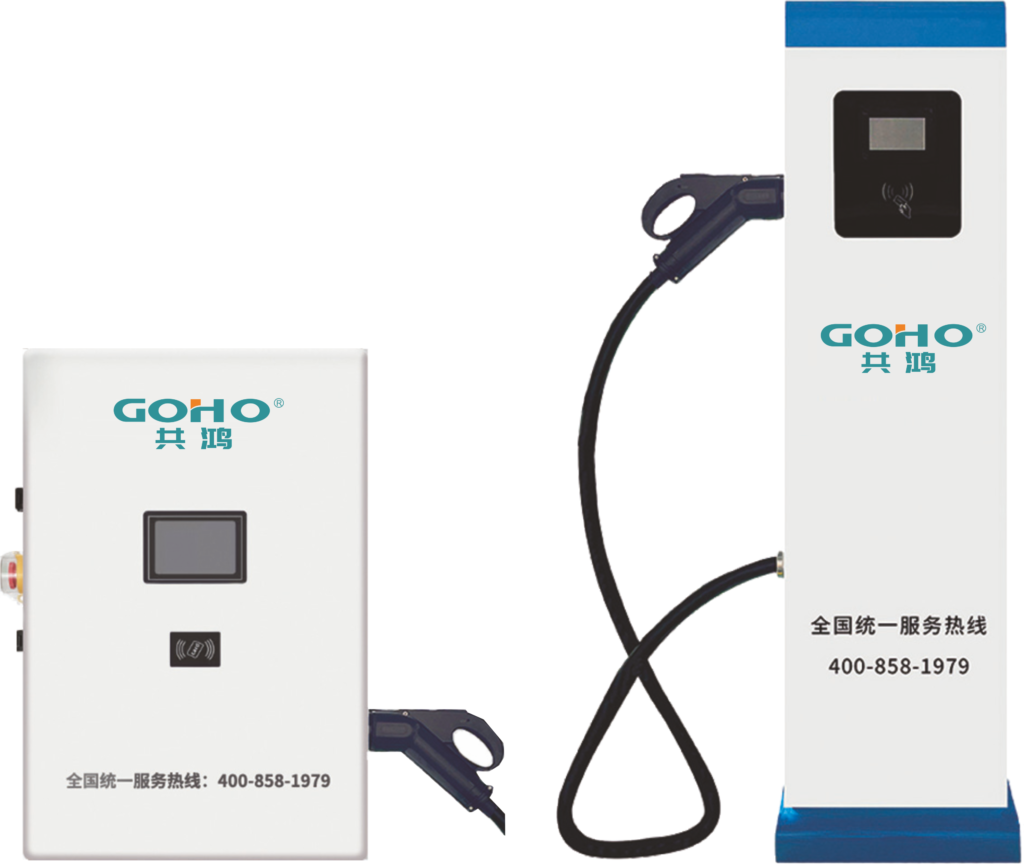
Compact fast chargers serve the quick-turnaround crowd — taxis, delivery vans. The 30-60kW pillar type mounts on a wall or pole and does not eat floor space.
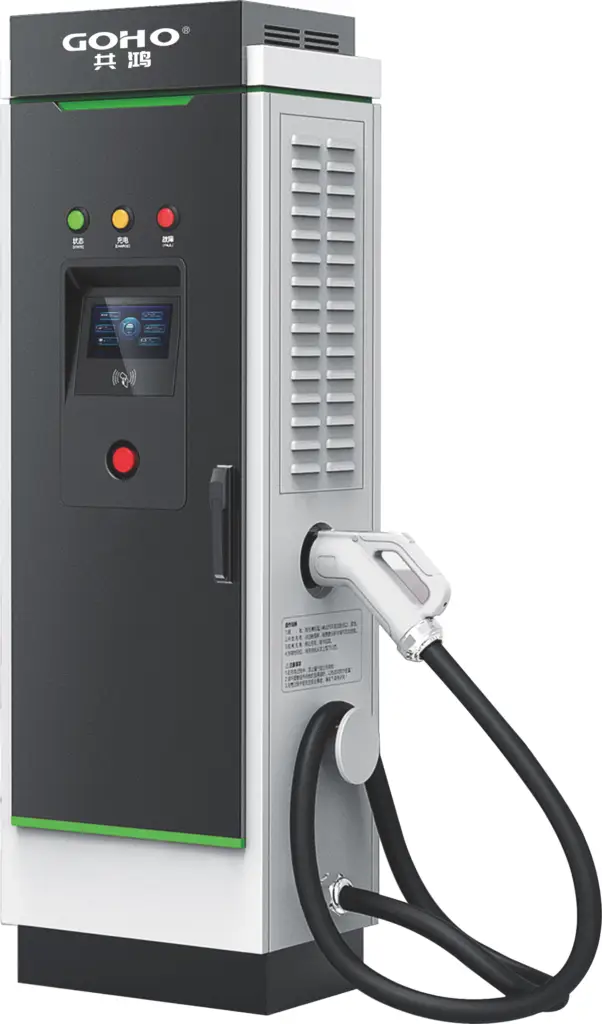
High-power fast chargers are where the revenue comes from. A 120-240kW dual-gun unit charges two cars at once and gives a driver a useful charge in 20-40 minutes — which is what turns a parking space into a recurring customer.
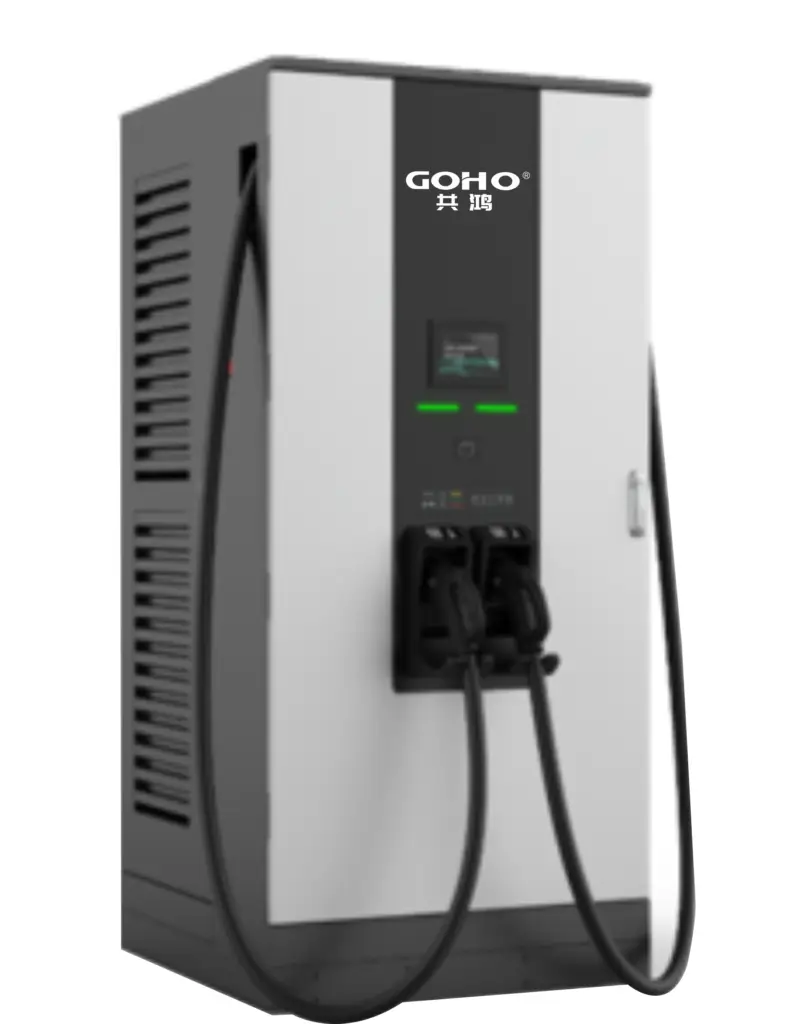
Ultra-fast chargers are the future-proofing play. A 300kW dual-gun handles the next generation of 800V vehicles that are starting to appear on the road.
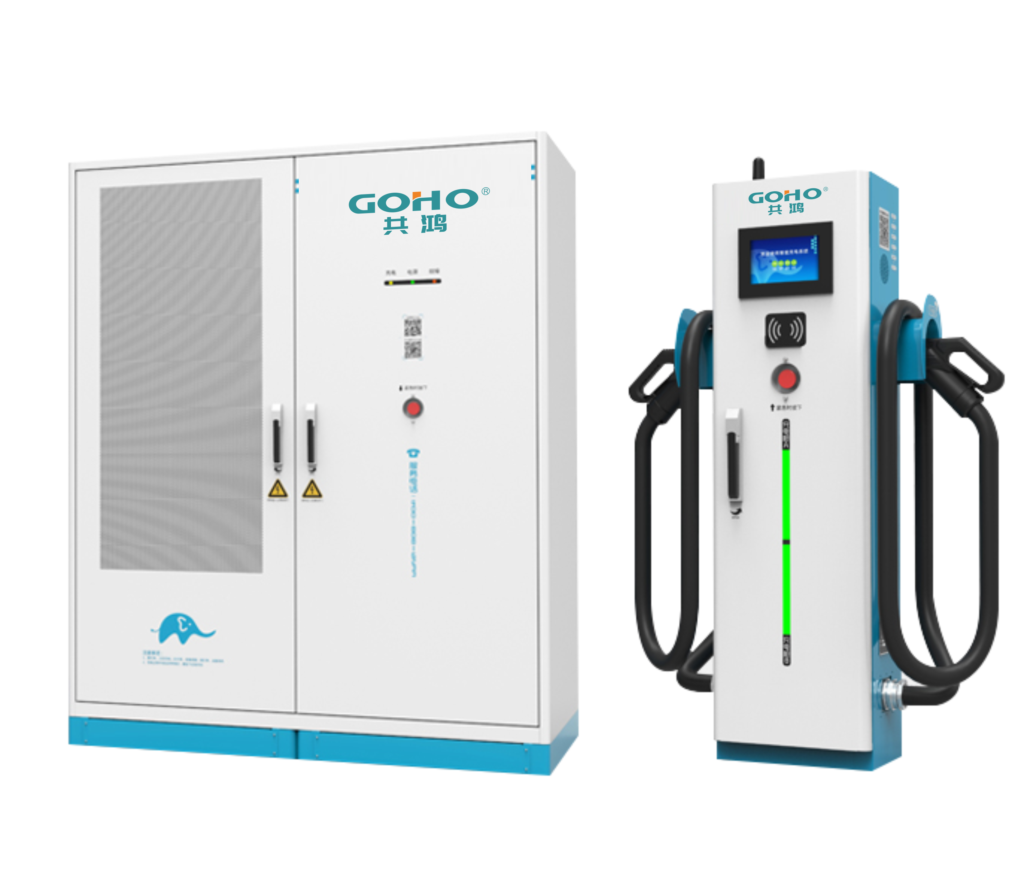
The power hub ties it together. A flexible stack (360-720kW) shares power across terminals, so you can start modest and grow by adding modules as demand builds.
What a realistic layout looks like
For a mid-size commercial station with 10-12 bays, a sensible mix might be:
| Bays | Equipment | Power | Job |
| 2 | 7kW AC × 4 | ~28kW | Overnight / long-stay |
| 2 | 30-60kW pillar DC × 2 | ~120kW | Quick turnaround |
| 4 | 120-240kW dual-gun × 2 | ~480kW | Main revenue |
| 2 | 300kW dual-gun × 1 | ~300kW | Ultra-fast, future |
That is roughly 900kW of connected capacity. And here is the uncomfortable part: if every charger drew full power at once, the grid connection and transformer for that would be enormous. This is exactly why power management is not optional. A flexible charging stack allocates the available power dynamically, so you serve more bays with a smaller connection — and avoid the utility demand charges that eat margins.
The grid side is where the budget hides
First-time builders are usually surprised by how much of the project cost is not chargers:
- Transformer. Above roughly 300kW, most stations need a dedicated step-down transformer. A 1000kVA unit is common for a mid-size site.
- Switchgear. The transformer needs protection, and the chargers need distribution. A prefabricated substation bundles HV switchgear, transformer, and LV distribution into one unit — which is a lot less site work than assembling them separately.
- Load management. A charging station management system (CSMS) watches total site draw and caps it, which is what keeps the demand charge from the utility in check.

Think of a charging station as a mini power distribution network. The chain is the same as any facility:
Grid → substation (HV switchgear + transformer + LV distribution) → charging stack (power sharing) → terminals (AC + DC) → vehicles
Once you see it that way, sourcing the whole chain from one manufacturer stops being a preference and becomes common sense — one supplier guarantees the compatibility, one set of drawings, one point of contact when something needs fixing.
And the business side
The hardware is only half the project. The operators who make money on charging stations tend to get four things right:
- Accurate billing. Per-kWh pricing on Class 0.5 metering (standard on GOHO DC chargers) so the numbers add up.
- Remote management. 4G/Ethernet connectivity for real-time monitoring, remote diagnostics, and over-the-air updates.
- Scalability. Start with a mix, expand with stack modules as utilization grows — do not build for a demand level that does not exist yet.
- Maintenance that is fast. Modular gear means a faulty module is swapped, not a whole unit replaced. Downtime is lost revenue.
A commercial charging station is not a row of chargers. It is a complete power system, and the ones that work are planned that way from the start — substation, power sharing, terminals, and management software as one integrated project.
If you are planning a station, talk to us about the whole power chain — we can help you design the mix and source it from one place.
Related Articles
- AC vs DC EV Charging: Which Charging Pile Do You Need?
- How to Choose the Right EV Charging Station Equipment
About the Author
GOHO Engineering Team — With over 15 years of experience in EV charging infrastructure, our team designs and produces transformers, switchgear, and charging equipment for DC fast charging projects worldwide. All GOHO products comply with IEC 61851, IEC 60076, and IEC 61439 standards. Learn more about GOHO.
Last Updated: September 2026
Related Products & Solutions
For complete low and medium voltage power distribution equipment, explore our full lineup:
- Pillar Equipment: EV charging station, vacuum circuit breaker, soft starter
- LV Switchgear: GGD fixed switchgear, XL-21 power cabinet, GGJ power factor correction capacitor bank
- MV Switchgear: GHRM SF6 ring main unit, KYN28 VCB panel, XGN66 fixed panel
- Transformers & Substations: ZBW prefabricated substation, distribution transformers