
Every factory has the same electrical skeleton underneath all the machinery: power comes in from the grid, gets stepped down, gets split up, and eventually reaches every motor, light, and socket. The companies that run into trouble are usually the ones who bought that skeleton piece by piece from different suppliers and then spent years managing the consequences.
Here is how the whole chain fits together, and why building it as one system pays off.
Follow the power from the fence line
An industrial facility’s electrical system is a hierarchy, and it is worth seeing it whole:
Grid → power transformer (step-down) → MV switchgear → LV switchgear → distribution boxes → loads
Step 1: the transformer sets everything up
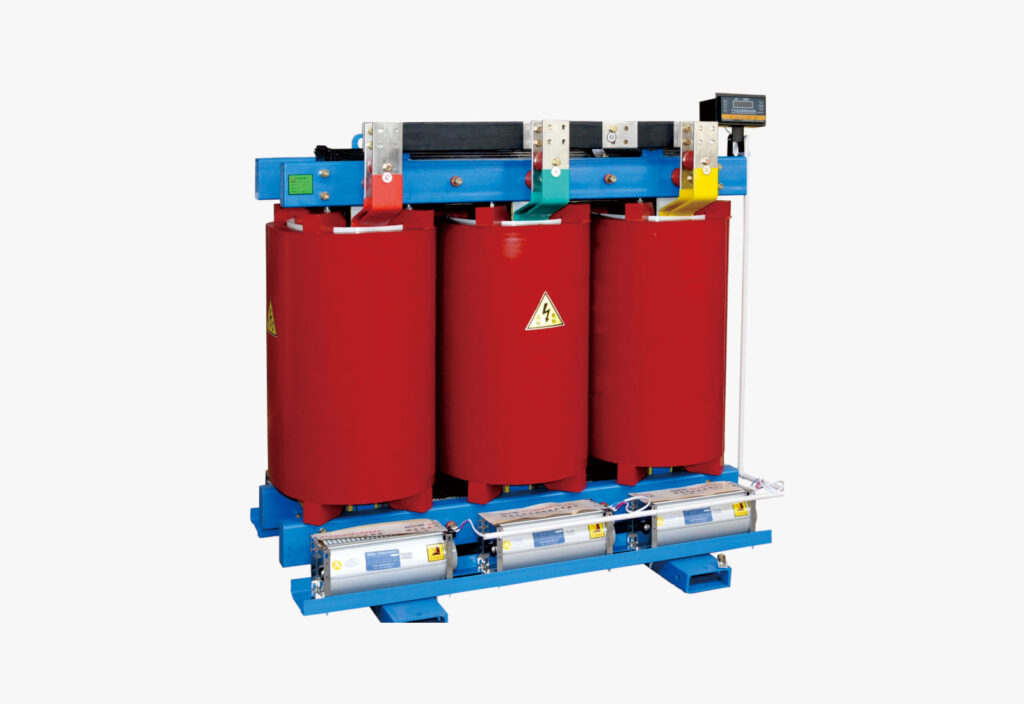
Most industrial sites take power at 11kV, 22kV, or 33kV and need to bring it down for internal use. Two options handle nearly every case:
- S11-M oil-immersed — the economical outdoor choice, with a dual-voltage 10/20kV design that adapts to different grid standards.
- SCBH15 amorphous dry-type — for indoor or fire-sensitive areas, with 60-80% lower no-load losses that quietly pay back over time.
Size the transformer for your connected load plus 20-30% growth. For a medium factory that usually lands between 500kVA and 2500kVA.
Step 2: medium voltage switchgear protects the front door

On the primary side, MV switchgear is the first line of protection — it guards the transformer and isolates faults before they reach the plant:
- KYN28-12 is the workhorse for 12kV industrial distribution, arc-resistant up to 40kA.
- KYN61-40.5 suits 35kV incoming supplies or plants drawing more than 15MW.
- GHRM ring main unit fits ring configurations or tight spaces.
Step 3: low voltage switchgear splits it up
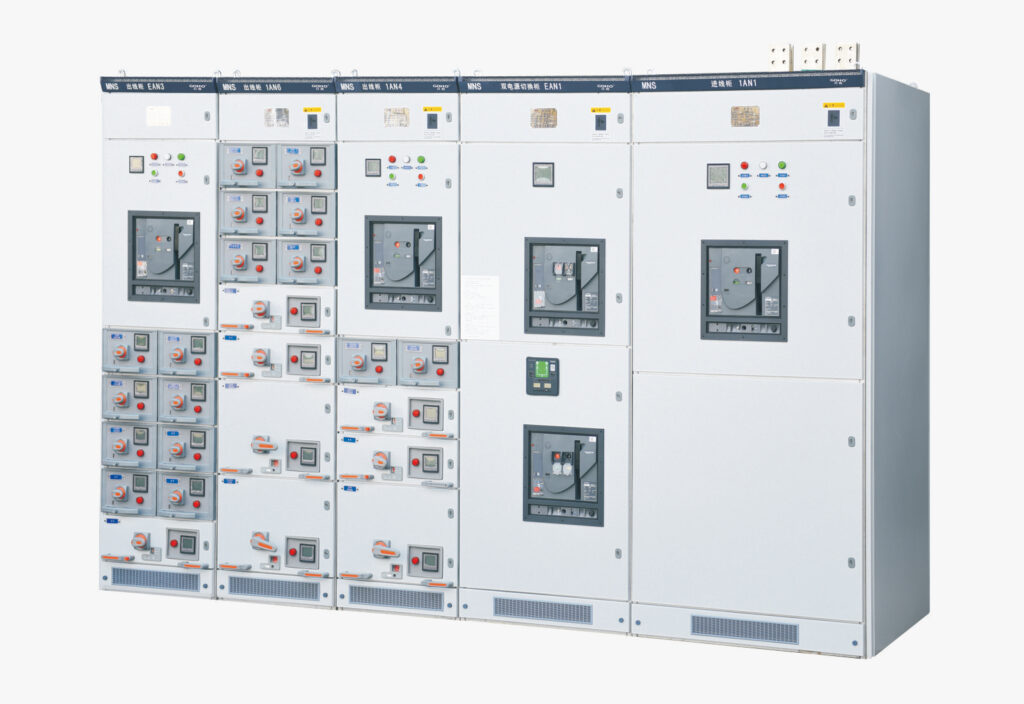
On the secondary side, LV switchgear distributes to the factory’s zones. The choice tracks how critical the supply is:
- MNS up to 6300A — where downtime is expensive and units must be replaceable without shutdown.
- GCS up to 5000A — the balanced choice for large facilities.
- GCK up to 3150A — cost-effective withdrawable for general industry.
- GGD fixed — the economical option where maintenance can be scheduled.
Do not skip the conversation about which one — the withdrawable versus fixed decision is worth more money than people expect, and it is the one that bites later if skipped.
Step 4: motors and power factor
Two specialized needs come up in nearly every plant:
Motor control. If there are many motors — pumps, compressors, conveyors — you want motor control centers. For big motors that hate hard starting, HGT solid-state and GHYT liquid soft starters cut the inrush and the mechanical shock.
Power factor. Industrial utilities charge penalties for low power factor, and it is easy to pay them for years without noticing. A GGJ capacitor cabinet holds power factor at 0.92-0.99 automatically. The payback — usually 6-18 months from reduced charges — is one of the more reliable investments in a plant electrical room.
Step 5: the last meters

At the end of the chain, distribution boxes reach the workshops and individual machines:
- XL-21 power cabinets — floor-standing for workshop power and lighting.
- GHM distribution boxes — general power and lighting circuits.
- PZ30 circuit boxes — the final branch circuits.
A concrete example
| Component | Product | Role |
| Transformer | S11-M 1000kVA | 11kV down to 400V |
| MV switchgear | KYN28-12 | Protect transformer primary |
| LV main | GCS | Distribute to zones |
| Motor control | MCC + HGT | Pumps and compressors |
| Power factor | GGJ | Correct PF, cut bills |
| Final distribution | XL-21 + GHM | Workshops and lighting |
Why one supplier changes the project
Sourcing the whole chain from a single manufacturer is not about avoiding a few phone calls. It is about:
- Compatibility. Ratings, busbar systems, and protection coordination are designed as one system, not patched together.
- One point of contact. Engineering support, documentation, and spare parts from a single source.
- Consistent testing. The same quality standards across every component, verified together.
- Simpler maintenance. Standardized parts and familiar designs mean a smaller spares inventory and less retraining.
It is the difference between assembling a system and buying one. Talk to our team if you are planning an industrial power setup — we can help you lay out the whole chain.
About the Author
GOHO Engineering Team — With over 15 years of experience in electrical power distribution systems, our team designs and produces complete solutions including medium-voltage switchgear, low-voltage switchgear, transformers, and distribution boxes for industrial projects worldwide. All GOHO products comply with IEC 62271, IEC 61439, and IEC 60076 standards. Learn more about GOHO.
Last Updated: September 2026
Related Products & Solutions
For complete low and medium voltage power distribution equipment, explore our full lineup:
- Pillar Equipment: EV charging station, vacuum circuit breaker, soft starter
- LV Switchgear: GGD fixed switchgear, XL-21 power cabinet, GGJ power factor correction capacitor bank
- MV Switchgear: GHRM SF6 ring main unit, KYN28 VCB panel, XGN66 fixed panel
- Transformers & Substations: ZBW prefabricated substation, distribution transformers